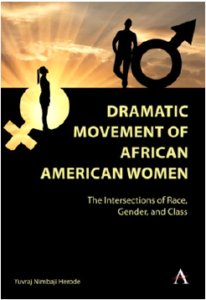
London and New York: Anthem Press, 2023, pp. 202, HB, Price: £ 80.00, $ 110, ISBN: 9781839988257.
Reviewed by Pravin B. Bhaskar
A world I dream where black or white,
Whatever race you be,
Will share the bounties of the earth
And every man is free.
(Langston Hughes, I Dream A World)
Yuvraj Nimbaji Herode is an Assistant Professor in the Department of English and Modern European Languages, University of Allahabad. His book, Dramatic Movement of African American Women: The Intersections of Race, Gender and Class is a saga of African American women’s theatre. It gives an authentic picture of the racial experiences of marginalized African Americans in white society. Throughout the book, Herode studies the plays of three promising African American women dramatists – Alice Childress, Loraine Hansberry and Suzan-Lori Parks in the light of racial and patriarchal marginalization.
Undoubtedly, the slavery system is rooted in America and it triggers the lives of African Americans. Many African American dramatists used plays to raise the voices of Blacks. This book proposes to look into them. Prof. Kashinath Ranveer has written foreword to the book in which he sets the tone for hammering on the roots of the triple jeopardy of African American women who are oppressed because they are Africans by race, women by gender identity, and poor as they are servants. The author has given a detailed history of African Americans from the beginning of enslavement, through the abolition of slavery, to the civil rights movement of the 1960s and the black presidentship of American in 21st century. The book talks about how the slavery system deeply impacted the social, economic, political, and cultural life of African Americans.
The author has defined African American theatre as the plays written and performed “by, for, and about African Americans in the United States” and he calls it a movement which fights against racism and classism (8). Consequently, for the author, African American women’s theatre is a movement which protests against racial injustice, white patriarchy, African American social order and the treatment of their white masters. The book has been divided into five chapters. In the first chapter, the author has deliberated on the tradition of African American women’s theatre from its genesis to the contemporary struggle for existence through various ups and downs in the way of it. The three African American women dramatists, named Alice Childress, Lorraine Hansberry, and Suzan-Lori Parks, are the representatives of this dramatic tradition in the United States.
The book recounts the difficult path that African Americans have taken to achieve their unfinished objective. The author has recorded vehemently the problems faced by the enslaved Africans in general and enslaved African women in America in particular through the celebrated plays of Alice Childress, Loraine Hansberry and Suzan-Lori Parks. The African Americans women are deadly saddened by the agonies throughout their history. The author takes us through the history of their dramatic movement, social oppression and exploitation, their fight against racism, and paucity of their voices in the American society. At the center of the stage are the marginalized characters who are fighting for their survival and forging their independent identity as human beings.
The author attempts to answer crucial questions about race and position of African American women in society. The book promulgates the ideas of liberty, justice, and gender equality. Despite the abolishment of slavery, African Americans are still begging for fundamental rights and their fights against colour discrimination is not yet over. All the annoying stories dramatized by Childress, Hansberry, and Parks in their plays are about black identity, struggle for social justice and self-respect. Their actions are directed towards the ways of freedom from slavery. Their plays ask some questions: Are African Americans human beings? Have they rights for education and accumulate money? On this planet everyone is born equal but whites push blacks in the hole of death. In the name of wages Americans and Europeans had forcefully pushed African Americans in the world of slavery. In the eyes of whites, Africans were very cheap and paltry, so nobody bothered about them.
The book examines the attachment of African Americans to their homeland. Africans always long for their homeland as it is seen in their songs. While dramatizing racial experiences, Loraine Hansberry, Alice Childless and Suzan-Lori Parks articulate for humanity and social equality. The book talks about how racism exits in American society and it often goes unnoticed. The author pensively portrays the different stories of exploitation and racism and raises questions vociferously about those who are humiliated in the name of race and colour. The book is rich in language, and addresses the whopping racial discrimination in the American south and hardships of African American women and their place in the patriarchal social system.
The author depicts bitter condition of ordinary African American family, their struggle against the evil white oppressive system. The author underlines the voices of African Americans who have been waiting for fundamental rights and want dignity and respect in American society. For example, Mama in the play Florence is a black woman and wants to see her daughter as a successful actress. She works very hard to earn money in American society but at every stage an evil eye of racial discrimination falls upon her. Nobody is bothered about the humiliation of Mama. The scar of colour discrimination has wounded Mama and she reveals the bitter truth of American white society when she was travelling in a train.
The author calls for equality, social justice and brotherhood through this book. For centuries, African Americans have been discriminated in the name of race and have been treated as slaves by white masters. The book endorses eradication of racism and social inequality and palpates the agonies and hardships of the marginalized African Americans. The author underlines the struggles of African Americans for regaining their rights. There is a deep line of hatred, pride and identity between blacks and whites and it cannot be easily erased. The blacks have been struggling for livelihood, dignity and identity in white society since long. The grave picture is also seen in A Raisin in the Sun, when the Younger family migrates to Chicago to fulfill the American dreams.
The story of Beneatha is exemplary of African tradition and identity. She wants to have medical education to change the fate of her black community and wants to serve the humanity and always feels proud on her African heritage. She stands firm and rejects assimilation to the white standards. Despite spending a few years in Chicago, the Younger family does not change their destiny, therefore, their American dreams shatter into pieces. They remain poor, powerless and helpless. The author has lamented over the suffering of African Americans who are not merely instrument of exploitation. Africans are tabooed as marginalized. They deserve to be blessed with “kindness, innate goodness and love” (Herode 173).
The author has selected the plays of African American women dramatists who faced exploitation and racism in American society. They fought against the evil foundation of colour discrimination and stood firm toward the social justice and equality. The collective efforts towards peace and humanity of African American dramatists are at the center of the book. The author vindicates black identity while narrating Park’s substantial drama The American Play. The author reiterates the long history of blacks with their rich heritage. The young generation wants to dig out the glorious past of their forefathers. Brazil, son of Foundling father performs black ritual when he discovers bones of his father. He understands his foundling father who left his family behind thirty years ago migrating to America and started to work as a grave digger. Brazil and his mother Lucy once unite with the spirit of the Foundling father. The black heritage is one of the important repositories of this book.
The book is a miniature replica of African Americans in white society, where the protagonists in the plays of Alice Childress, Hansberry and Suzan-Lori Park are subjugated at the hands of whites. It gives a picture of African Americans who receive filthy treatment from the whites. It pleads that stigmatization of African Americans should stopover and let them live peacefully in realm of whites and let them enjoy the fruits of equality. The book is an account of rich African heritage, the unsung struggle of African Americans, and the revolutionary African American women. It is a significant contribution to American literature in general and African American literature in particular. It is a voice of voiceless African Americans, and directs the dystopian society to stop dehumanizing the oppressed classes. The book advocates for the establishment of a noble society regardless of race, gender or class.