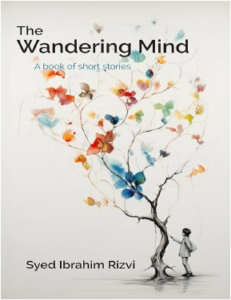
New Delhi: GenNext Publication, 2024, pp. 101, Price: 250, PB, ISBN: 978-93-5663-173-1.
Reviewed by Amar Nath Kumar
A book of short stories is always refreshing, a respite from the abstruse, metaphysical world of poetry and also from the tedious journey through hundreds of pages in a novel. The characters in a short story are usually few in number and one can easily finish a story by flapping through 5 to 8 pages. Artistically, the author has to display his art and maintain the structure very economically as he doesn’t have the liberty of unfolding the plot in hundreds of pages. On the other hand it is quite difficult to shape up the characters in this limited space and one can only have some peep into a particular aspect of the characters’ personalities. But in spite of all these limitations, we have timeless short storieswhich are flawless in structure, content and also the characterization; and many of them have been adapted into plays, movies or even other genres of art and literature.
Considering all these aspects, the author’s foray into this genre has been very daunting and he has taken up the challenge with utmost sincerity and devotion towards his art. A writer of short stories and also for that matter a novelist has to achieve two things simultaneously. One is the art of telling the story to the readers, which obviously should be in such a way that the reader finds it impossible to put the book aside; he is soaked in the meanderings of the narrative and the story itself captivates him. Another dimension is the structure on which the whole edifice is mounted; and this includes the techniques used in the narrative, the insertion of characters, the watertight form, and also the initiation and the ending. A short story which has a great technique as well as a sound story line is bound to hit the bull’s eye. The Wandering Mind strives hard to maintain a balance between the two, however, the author has been successful only in a few stories. Often the storytellers lose their grip over the structure while narrating the story to the readers, and this happens because they prioritise the emotions and feelings, keep on adding words to delineate trivial issues (which even otherwise the reader could understand).
The book, The Wandering Mind, is an interesting read for any adult. The plots have been made interesting by their share of twists and turns. The narratives have not been quite linear and often there are surprises in store for the reader; the stories become enthralling due to their contemporary content; the reader finds an instant connection with the worlds within the stories. All the stories give a reflection of modern day relationships, the vulnerability and insecurity in today’s marriages which are more and merely mantled by useless rituals and show of opulence, the vagaries of the middle class people and also the corruption, debauchery and treachery in business and politics. So in this regard the reader doesn’t ever find himself alienated from the society of which we are a part, and the settings are typically urban Indian with none of myths, supernaturalism or impossible elements.
However, at times the author seems to have fished out his plots from Bollywood movies. A lot of conflict resolution within the plots happen through chances and coincidences, which otherwise don’t happen in reality. In this regard, the manner in which the outcomes happen, at times become dreamy, imaginative, impossible and unrealistic. Syed Ibrahim Rizvi is a scientist, a person who has been associated with science almost throughout his life, and the touch of science, the scientific facts and also rationality are laced almost in every story. Thus, phrases like, ‘eighty six billion neurons’, ‘dopamine’ and other technical terms and compounds known only to researchers abound in number. Also the laws of physics are used in abundance. However, the author in his style has used these details of science in a manner which is not boring, but revealers of information and above all are sandwiched with the author’s impeccable sense of wit and humour, and his deep understanding of human behaviour and psychology. The author sheds light moments within the narrative and these interludes are interspersed like salt and pepper finely sprinkled over a dish which is welcoming and brings streaks of smiles to the reader who is delighted at the manoeuvre of the story teller.
The author always picks up his experiences which are buried in his consciousness and his childhood memories. Prof. Rizvi has been a thorough academician and a researcher, and this can be sensed in the background and settings of his stories where most of them pertain to the routine and mundane activities of students, their bent of minds, their experiences coming from the fertile lands of classrooms, campus and hostels. The author does venture into the world outside the campus in the titles like “The Last Laugh”, “The Bangle Seller” and “The Neighbour’s Wife”, but again
his control and command can be sensed in depicting the lives and emotional world of students who are young adults, have vacillating minds, and on account of ambiguities are many times unable to take decisions. The theme of love, youthful attraction and even passion runs strong in many of the stories. The author strongly believes in poetic justice and in his endeavour to do so, often he has experimented and toyed with the plots, making them a bit unrealistic at places.
Of the stories, “The Bangle Seller” has come up quite well and never fails to deliver the intended message to the readers, and similarly “The Last Laugh” is very intriguing and keeps the reader engaged with its trajectory of events, the extraordinary science involved and also looks like a crime thriller at times. The author’s intentions become very clear at the end of every story, and they reflect his belief in karma, the strength of destiny and the justification of good over evil. In turn, it also indirectly points towards the idealism and the pristine thoughts of the author which he wants to convey to the world. In this regard, the author truly blends science and humanities, and true to the words of Wordsworth and Shelley who have called arts the saviour of human race, he clearly demonstrates that no matter we may take giant strides in science and technology, we may be master minds in cunning and deceit, one may conquer everything within this virtual world, but human race cannot survive without basic values of empathy, sympathy, affection and maintenance of interpersonal relationships. The author, though, has honed his skills in science, yet a deep sensitive soul resides within him who is affected by even the slightest misbalance in his surroundings. “A Night with a Damsel” is a tribute to the author’s late father. He minces no words in expressing his adulation, admiration and also the reverence towards the skill and knowledge which his late father had for the game of cricket.
Prof. Rizvi has a tight control over the language, and often bursts into metaphors and idioms throughout and with these sound skills he could have taken the language up to a different level, but the deftness and precision of language is not maintained throughout. Most of the stories are in third person omniscient narration and here also the author could have adopted different techniques to give artistic and literary splendour. Also, the author could have added a few more stories to this collection which would have made the collection more varied and could have added to the bulk of the book. But overall, the book is a breezy walk within the meadows and valleys of life, showing the multitude hues of the society and world.